The Healthcare Shower Selection Guide: A Practical Scorecard for Choosing the Right System

Choosing a shower for a healthcare environment goes well beyond size, finish, and price. It has to work for the patient bathing, the caregiver assisting, the team cleaning and maintaining it, and the facility responsible for it over time.

A system that looks right during procurement can create problems later if it's hard to clean, depends on frequent sealant maintenance, doesn't fit the patient population, or is difficult to repair.

This guide gives facility, clinical, design, and construction teams a consistent framework to evaluate every shower system across ten categories, then compare options with a weighted scorecard.

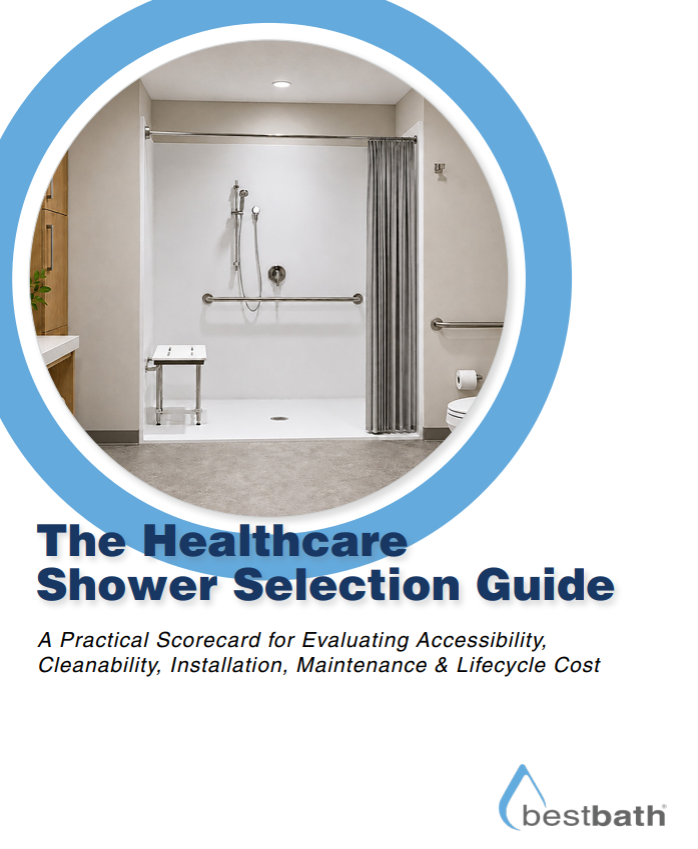
Shower Selection Cover

How can this guide help you?

  • Start with the care environment.
    Document facility type, project type, patient mobility, and assistance needs before comparing products, from acute and long-term care to memory care, rehab, and bariatric settings.
  • Confirm accessibility and compliance up front.
    Use a seven-question checklist to review entry, thresholds, clear floor space, and accessory placement before anything is ordered.
  • Plan for patients and caregivers.
    Evaluate controls, seating, grab bars, and working space so the shower supports safe bathing and assisted care.
  • Verify what's behind the surface.
    Check wall backing, weight capacity, and mounting flexibility for grab bars, seats, and future needs.
  • Look closely at cleanability and moisture management.
    Understand how surfaces, seams, and sealant-dependent joints affect daily cleaning, inspection, and where water can go if a joint fails.
  • Balance access and water control.
    Compare threshold height, slope, drain position, and slip resistance as one system.
  • Score every option the same way.
    Use the weighted scorecard to compare installation, maintenance, lifecycle cost, and manufacturer support in a documented, side-by-side review.